Exploring the Allure of Eastern Ornament Borders
Understanding the Visual Language
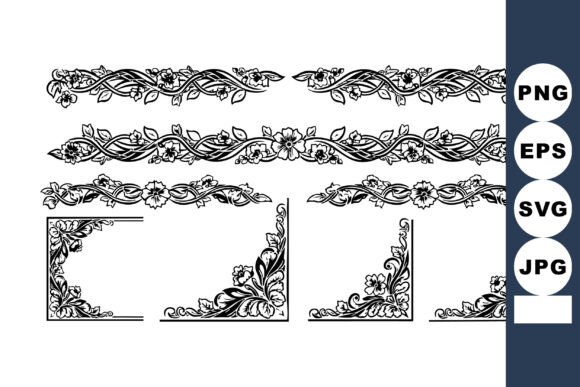
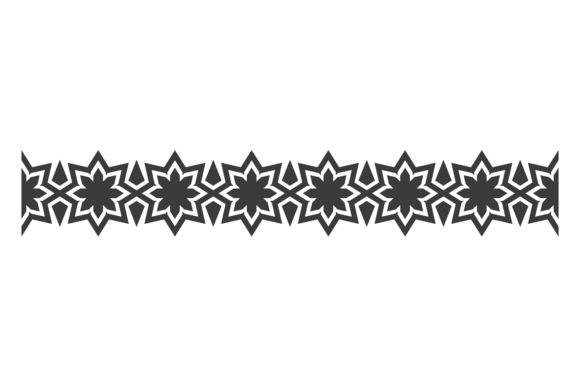
When we talk about a Decorative Border in Eastern Ornament Style, we are describing more than just a line around a box. It is a visual system steeped in history, geometry, and spiritual meaning. These horizontal patterns, often seen isolated on white backgrounds in vector formats like EPS or transparent PNGs, feature intricate, repeating motifs. You will typically find geometric precision mixed with organic, flowing curves—think arabesques, tessellations, and stylized floral arrangements. The personality of this style is one of balance and harmony. It commands attention not through loud noise, but through its complexity and mathematical perfection. For a designer or brand strategist, using these borders is a way to inject a sense of heritage, luxury, and thoughtful craftsmanship into a project.
Where This Style Shines
The versatility of a Decorative Border in Eastern Ornament Style is one of its greatest assets. Because the pattern is often horizontal and scalable, it fits seamlessly into a variety of modern typography and layout needs. In editorial design, these borders serve as elegant dividers between chapters or columns, guiding the reader's eye without using standard, boring lines. For packaging design, especially in the gourmet food, beauty, or luxury goods sectors, wrapping a product in an ornamental border immediately elevates the perceived value. It suggests that what is inside is precious.
In the digital realm, these assets are incredibly useful for web design and social media graphics. Imagine a horizontal ornamental strip separating the header from the body content on a website—it creates a visual "breath" that feels sophisticated. For social media graphics, these borders can frame a quote or a promotional text, making a simple Instagram post look like a piece of art. Entrepreneurs and small business owners can use these elements to create a distinct brand identity that stands out from the minimalist, sans-serif dominated landscape.
Strategic Application in Branding
When incorporating a Decorative Border in Eastern Ornament Style into your branding toolkit, you are making a strategic choice about perception. This style communicates a specific set of values: tradition, intricacy, and high quality. It works exceptionally well for businesses that want to position themselves as artisans or experts in their field. However, the challenge lies in execution. Because the border is detailed, it can overwhelm a layout if not handled with care.
The key to success is balancing this intricate design asset with cleaner elements. If you pair an ornate eastern border with a heavy, decorative serif font or a complex script font, the result might be chaotic and unreadable. Instead, treat the border as the star of the show. Pair it with a clean, neutral sans serif font or a simple serif font with good legibility. This creates a necessary contrast, allowing the ornamental pattern to shine while keeping the message clear. This approach ensures your font pairing enhances readability rather than hindering it.
Practical Guidance for Implementation
Before you download and drop these borders into your next project, consider a few practical aspects to ensure professionalism and consistency.
- Evaluate the Format: Since you are likely dealing with vector files (EPS, SVG) and raster files (JPG, PNG), choose the right tool for the job. Use SVG or EPS for print and large-scale applications to ensure the horizontal pattern remains crisp. Use transparent PNGs for web overlays where you need the background to show through.
- Color Adaptability: A good ornamental border should work in a single color (monochrome) as well as it does in full color. Test the pattern in black and white to see if the geometry holds up. This is crucial for applications like embossing, foil stamping, or single-color logo design elements.
- Scale and Density: Observe how the pattern behaves when scaled down. If the details blur together at small sizes, it is not suitable for business cards or mobile favicons. Conversely, if it looks too sparse when scaled up, it may fail as a background texture for a poster.
- Licensing: Always verify the commercial licensing of the asset. Whether it is a premium font or a graphic element, ensure your license covers your intended use—be it merchandise, digital ads, or broadcast media.
Enhancing Audience Engagement
Ultimately, the goal of using a Decorative Border in Eastern Ornament Style is to capture and hold attention. In a content-saturated world, generic layouts fade into the background. A well-placed ornamental border acts as a visual hook. It slows the viewer down, inviting them to appreciate the design before they consume the content. This is particularly effective for content creators and bloggers who want to create a premium reading experience.
For marketers, these borders can be used to highlight calls to action or special offers. Framing a "Limited Time Offer" in an intricate geometric border draws the eye directly to the conversion point. It uses visual weight to signal importance. When used consistently across touchpoints—from website headers to email footers—this style builds a cohesive visual language that strengthens brand recognition. It transforms a simple layout into a curated experience, reflecting a level of care and attention to detail that audiences instinctively trust. By integrating these timeless patterns, you bridge the gap between historical artistry and contemporary creative font usage, resulting in designs that feel both grounded and fresh.